A periplous (in Greek) or periplus (in Latin) is supposed to be a round trip, but by extension, it can also be a single way trip from one point to another. It concerns maritime navigation and it often provides information on the facilities available at the various ports of call, and distances between them, like a nautical log. Over 15 peripli have been found in ancient literature, some do not mention any coastal place, some mention hundreds like Ps-Scylax with nearly 650 coastal places. The following list of periploi was found, in chronological order.
Jason’s voyage with the Argonauts (13th c. BCE) starting and ending at Ioclos (Volos near Thessaloniki, Greece) after a trip to Colchis (now Georgia) and to other places of the Mediterranean Sea. It is reported in Apollonius of Rhodes’ Argonautica around 240 BCE and mentions 45 coastal places (https://remacle.org/bloodwolf/poetes/falc/apollonius/vie.htm).
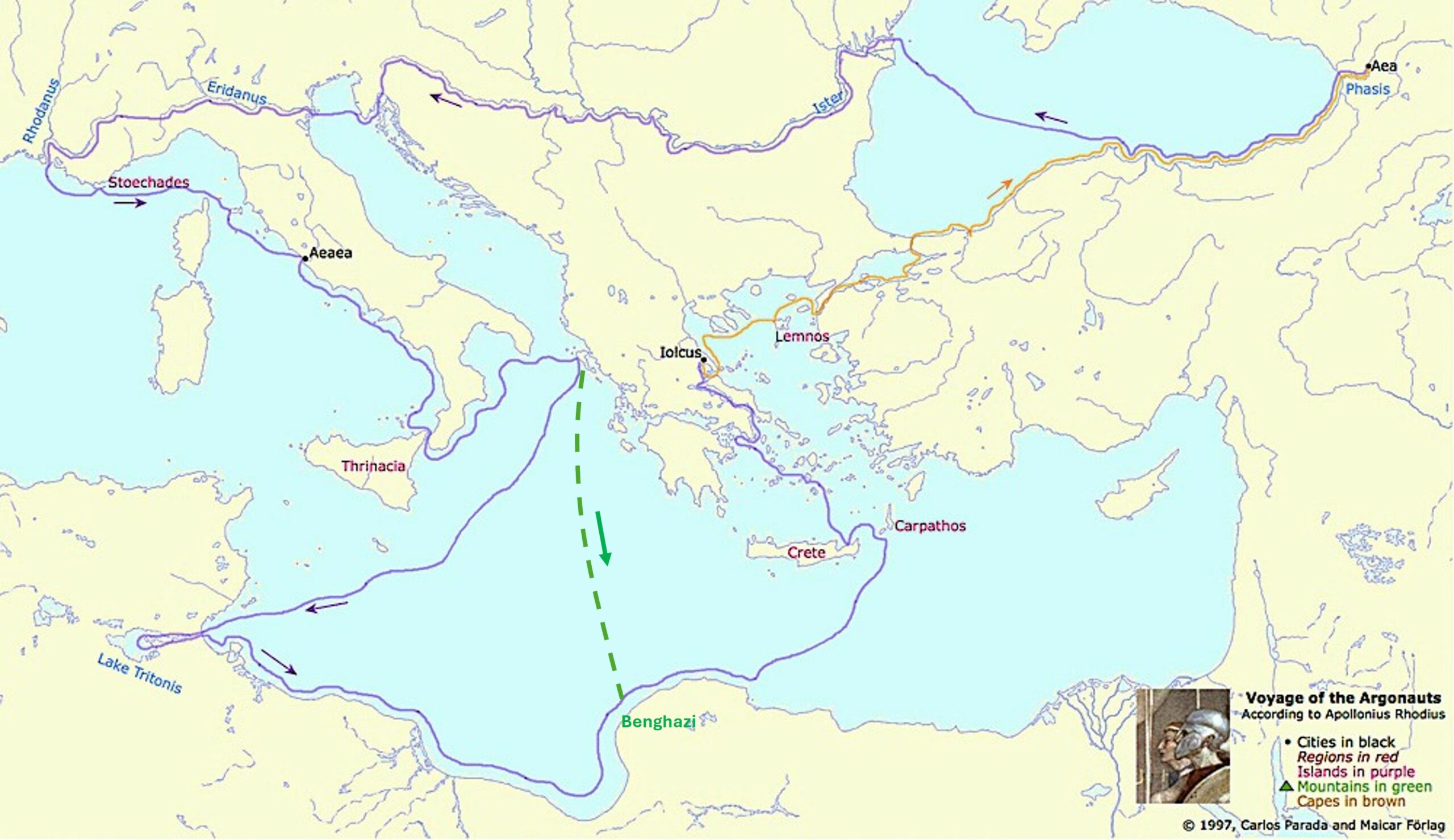
(https://www.maicar.com/GML/ARGONAUTS.html)
with Lake Tritonis tentatively at Benghazi yielding a more direct trip.
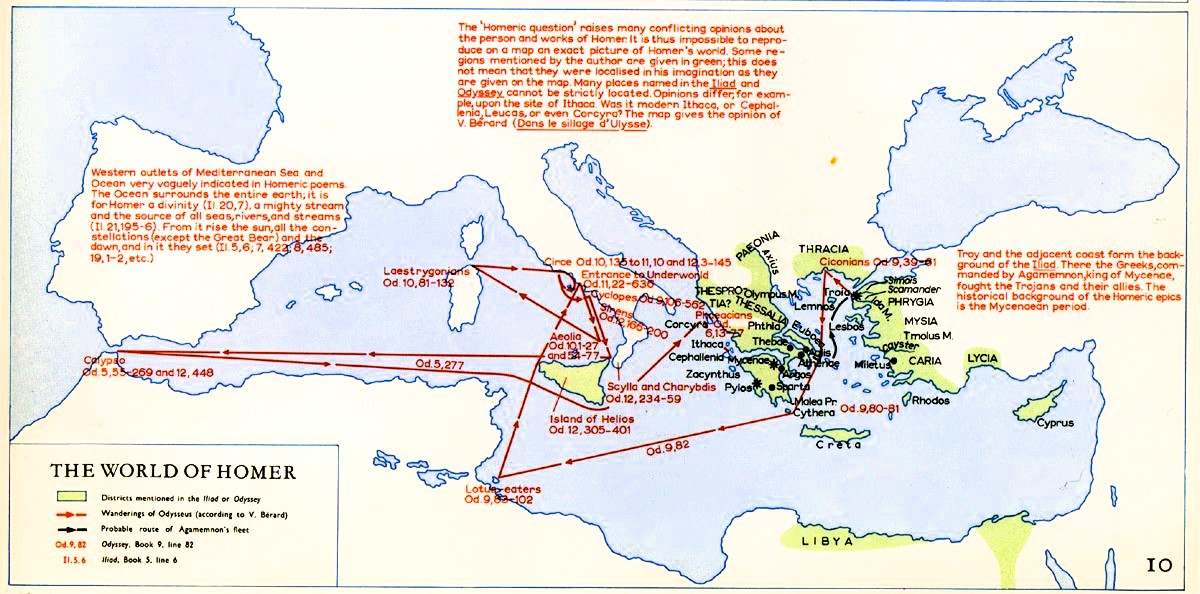
The Odyssey (13th c. BCE) journey back home from Troy to Ithaca recounted in Homer’s poem (7th c. BCE). It mentions coastal places that are difficult to locate, but 40 to 50 places are identified as probable locations. Modern literate sailors have tried to reproduce Odysseus’ trip (Tim Severin, 1987, Jean Cuisenier, 2003).
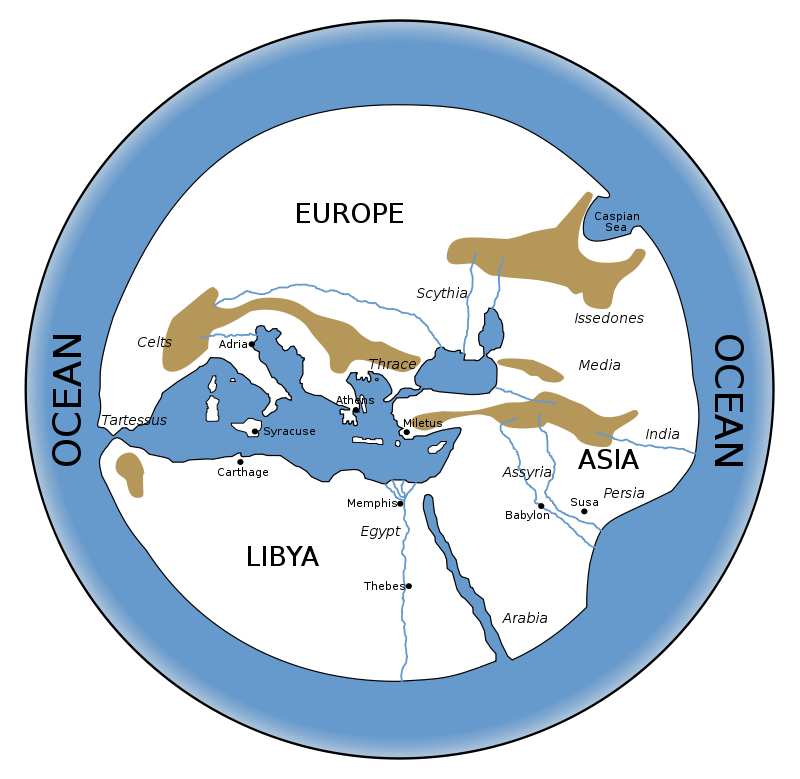
Periplous around Libya-Africa (ca. 600 BCE during Necho II’s reign) reported by Herodotus (4, 42) in ca. 450 BCE. It does not mention any coastal places, but it proves they sailed south of the Equator (https://remacle.org/bloodwolf/historiens/herodote/index.htm ).
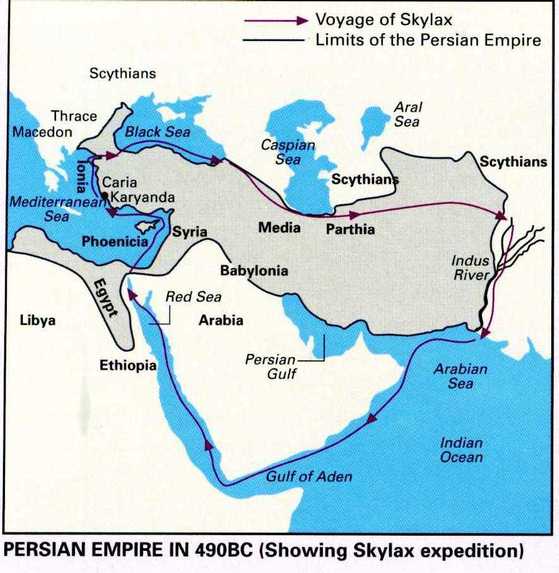
Scylax of Caryanda’s voyage from the Indus to Suez, ordered by king Darius I (ca. 515 BCE). Only 7 fragments quoted by others reached us :
https://www.hs-augsburg.de/~harsch/graeca/Chronologia/S_ante06/Skylax/sky_peri.html )
It does not mention any coastal places.
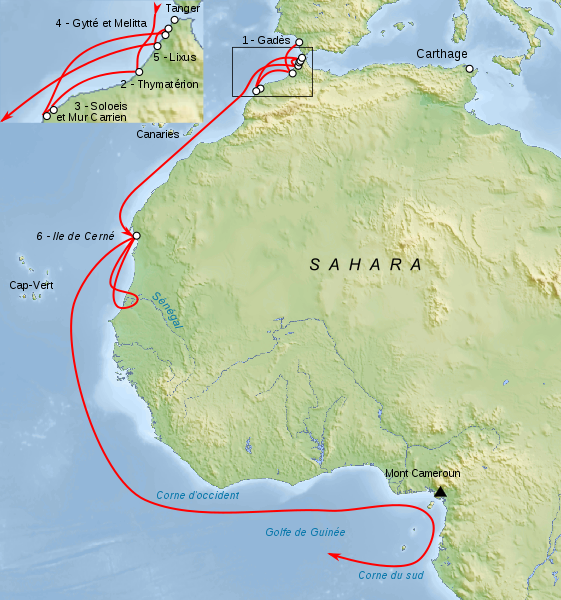
Hanno’s periplous to West-Africa, from an anonymous author (6th – 4th c. BCE). Greek translation of a stela in a Punic Baal-Hammon temple at Carthage, published in the 9th c. “Heidelberg Manuscript”. It mentions 10 coastal places (Bouysse, 2017).
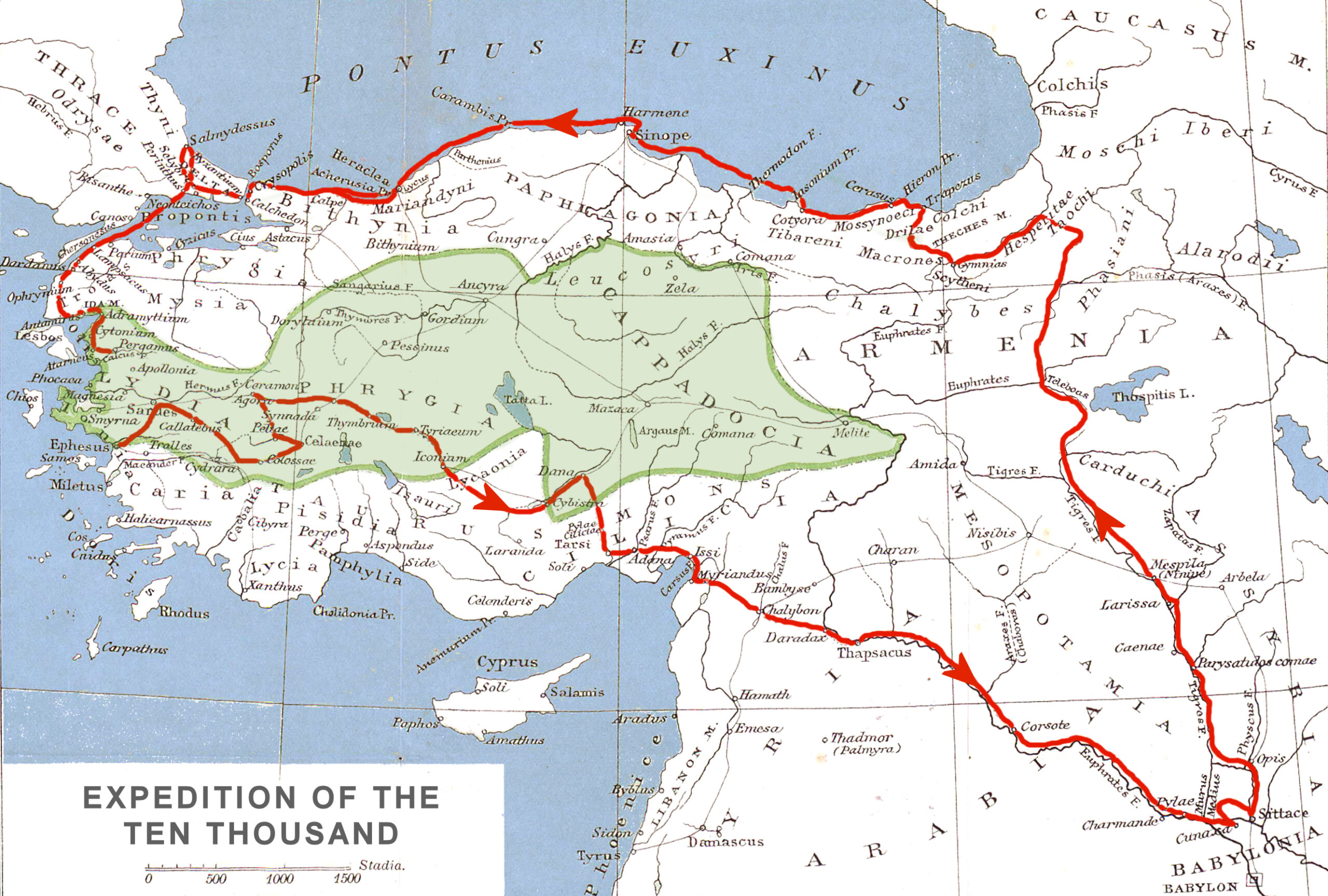
Xenophon’s Anabasis (books 5-6-7, 401 BCE) tells about the trip of Xenophon’s 10 000-men army along the Black Sea coast of Turkey from Trabzon to Byzantium and further to Pergamon. It mentions 13 coastal places (https://remacle.org/bloodwolf/historiens/xenophon/index.htm).
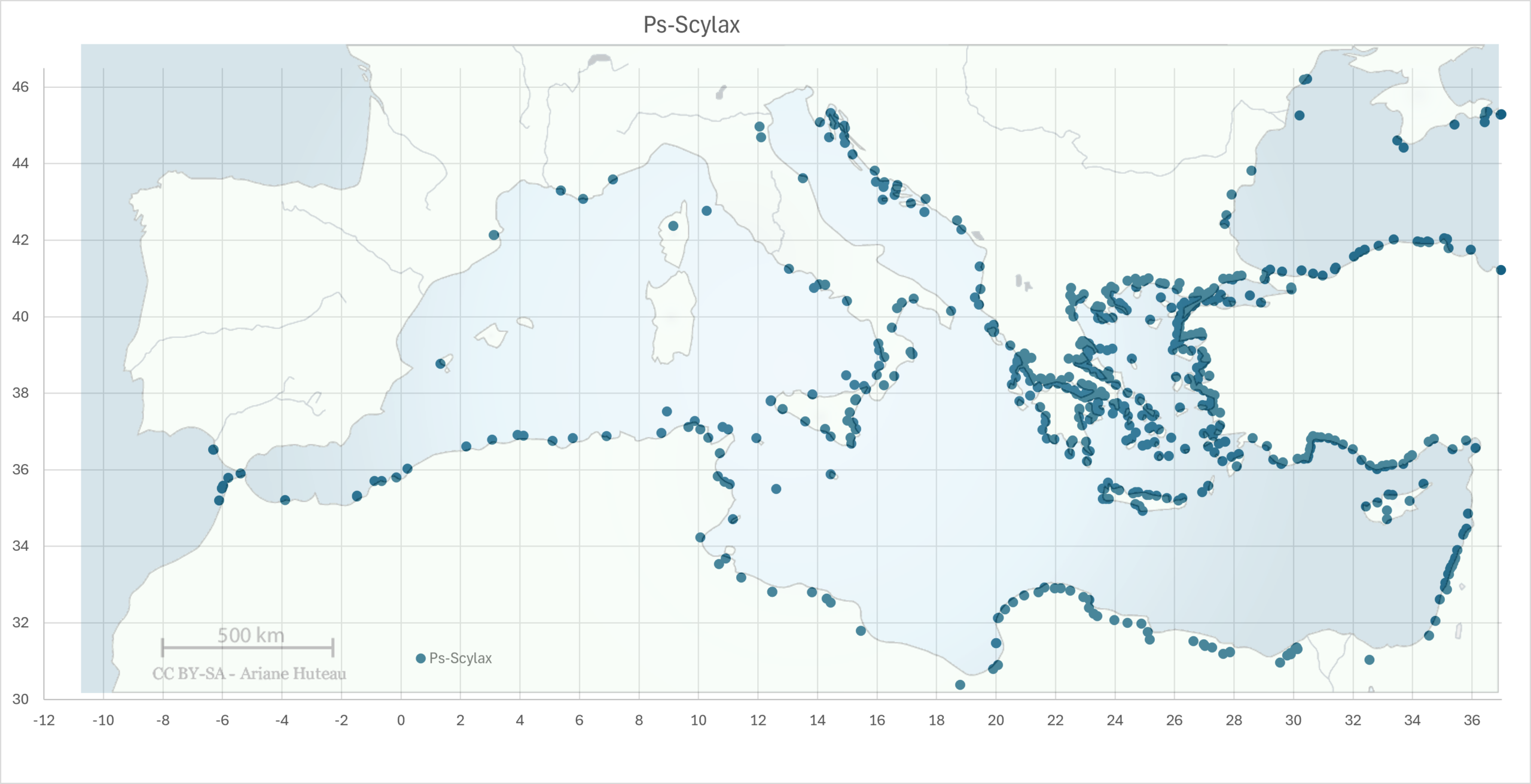
Ps-Scylax’s periplous (dated 338-337 BCE by translator Graham Shipley, 2011) is a clockwise circumnavigation of the Mediterranean Sea and Black Sea, starting in Spain and ending in West Africa beyond the Straits of Gibraltar. It mentions 643 coastal places (Shipley, 2011).
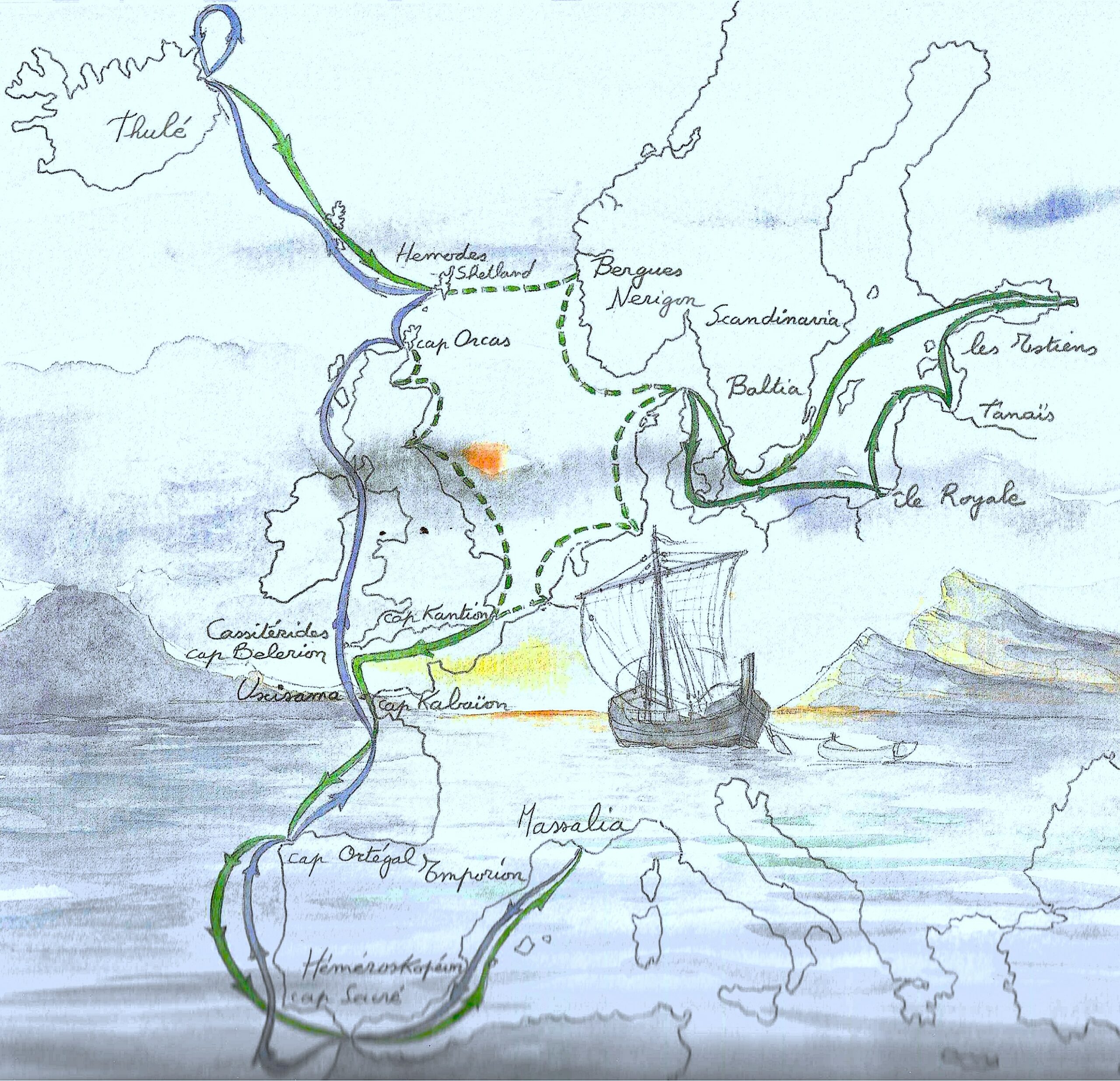
Pytheas’ Peritou Oceanou (dated ca. 325 BCE) did not survive but is quoted by several ancient authors as it describes a trip to the British Isles, the Baltic and possibly to Iceland which he called Thule. It mentions 5 coastal places (Journès, et al., 2000).
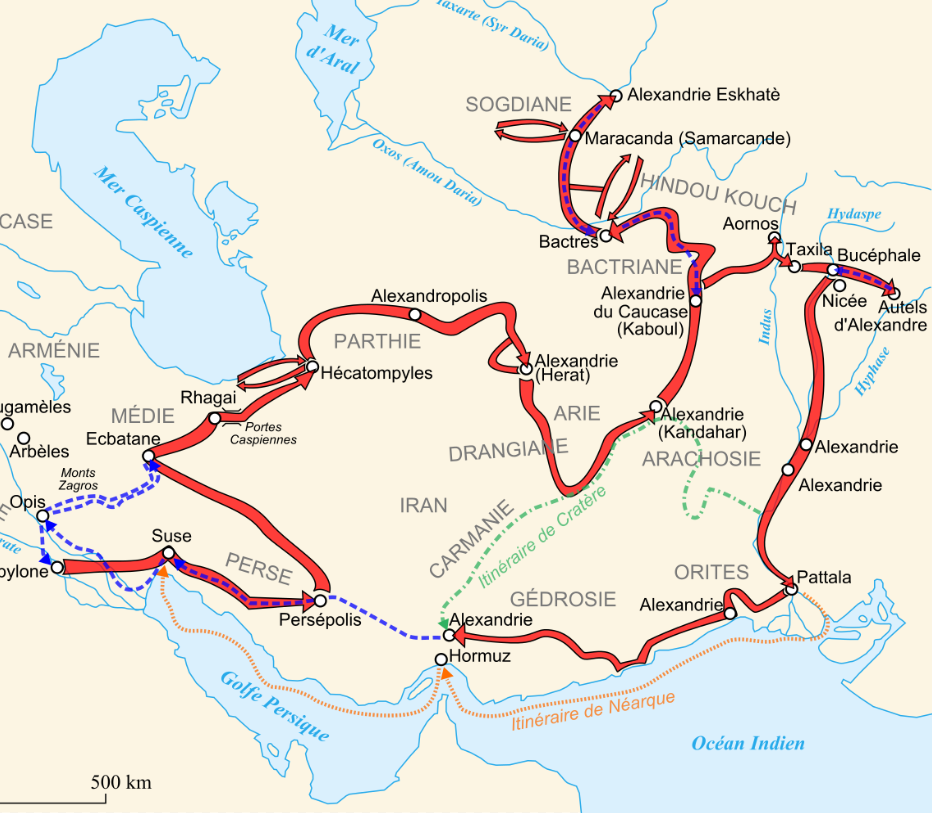
Voyage of Nearchus from the Indus to the Euphrates (325-324 BCE) as reported by Arrian (86-160 CE) and translated by William Vincent, 1797. It mentions 65 coastal places (https://sourcebooks.fordham.edu/ancient/arrian-bookviii-india.asp).
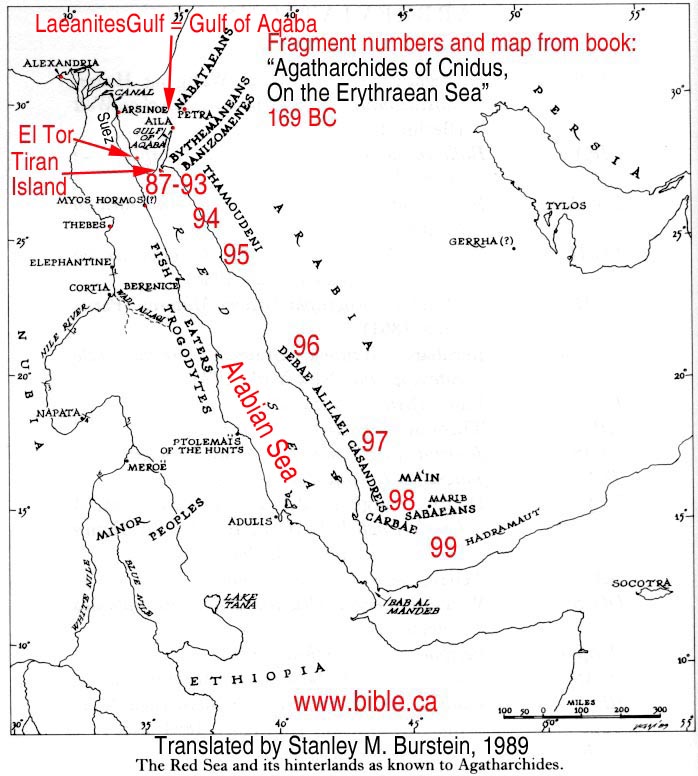
Peri tes Erythras Thalasses by Agatharchides of Cnidus (dated 145 BCE by translator Stanley Burstein, 1989) describes both sides of the Red Sea. The original text was lost but quotes by other ancient authors were collected by Photius in the 9th c. It mentions 23 coastal places (Burstein, 1989).
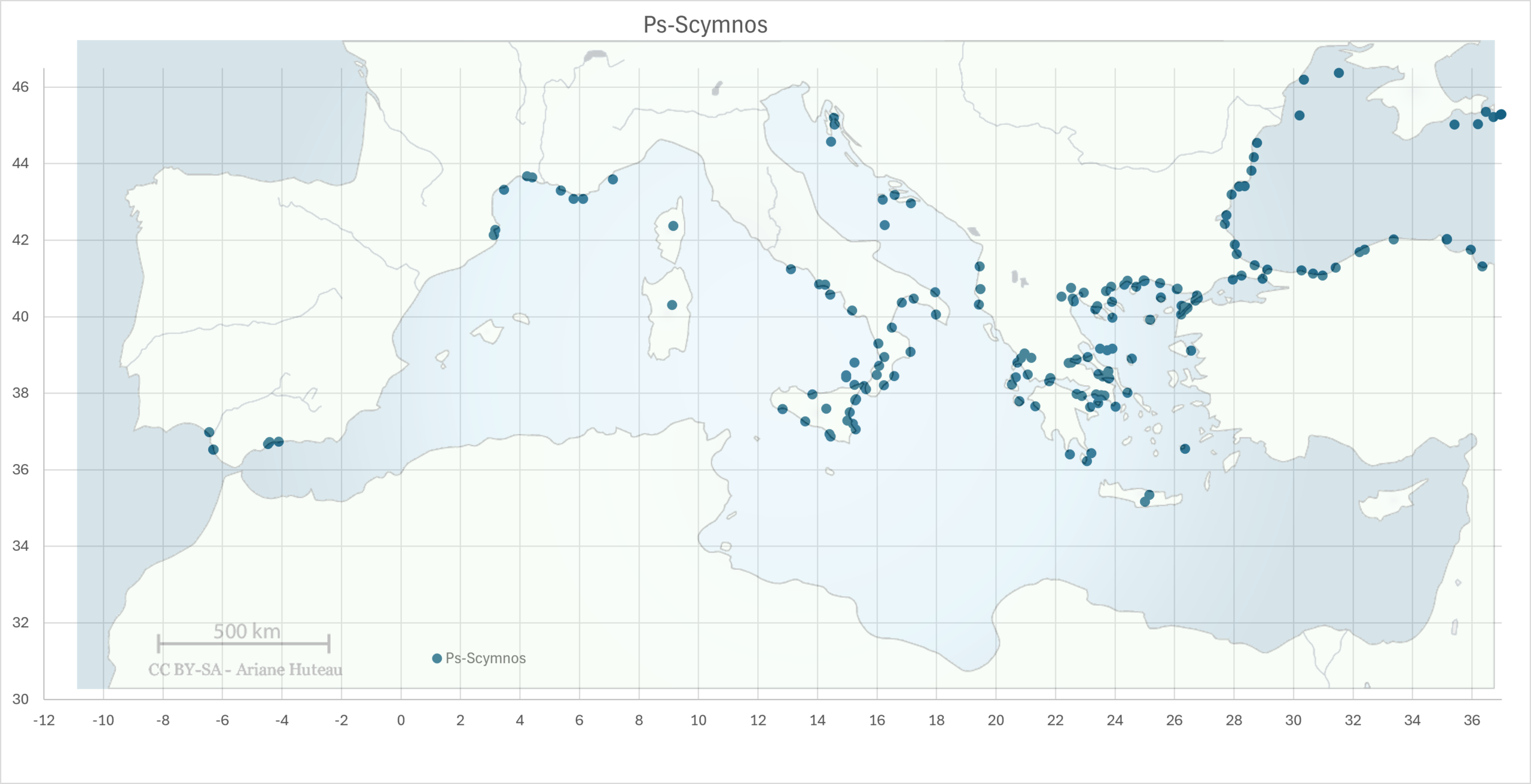
Ps-Scymnos’ Periodos to Nicomedes, with only 747 verses and 34 fragments preserved, reporting a trip from Gilbraltar to the Black Sea following the northern Med coasts via Spain, France, Italy, the Adriatic and Greece. It is dated 133-110 BCE by translator Didier Marcotte, 2000. It mentions 194 coastal places (Marcotte, 2000).
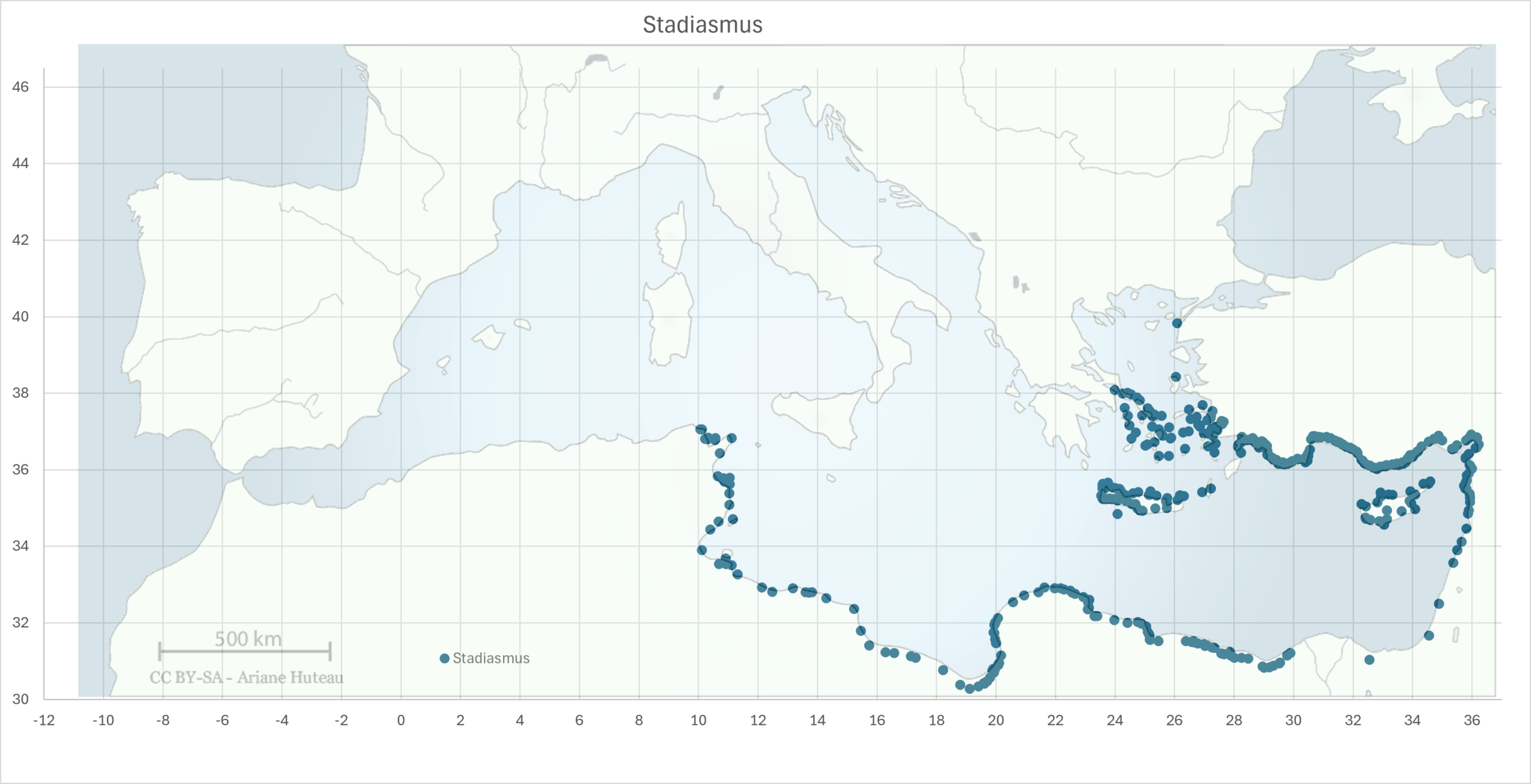
Stadiasmus Maris Magni describing coastal harbours from Alexandria in Egypt to Utica in Tunisia, and from the Levant to Miletos (Turkey), including many islands and Cyprus and Crete. It is from several anonymous authors, dated 2nd-1st c. BCE, probably compiled by Hippolytus of Rome (170-235 CE) and translated by Pascal Arnaud (in press). It mentions 420 coastal places (Arnaud, 2020).
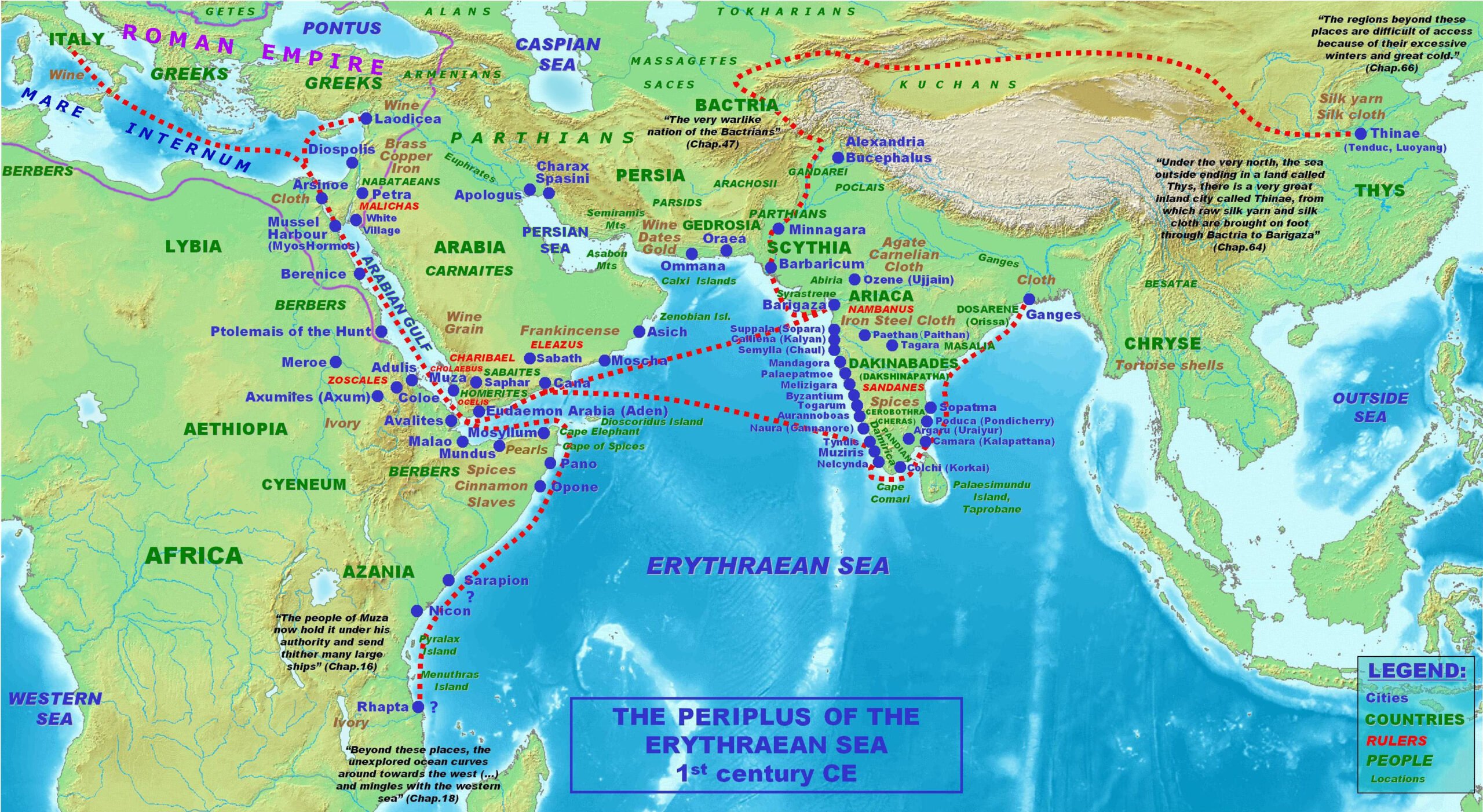
Periplous Maris Erythraei (PME) describing the coasts of the Red Sea, the Persian Gulf, the Arabian Sea and the northern reaches of the Indian Ocean. It is from an anonymous author, ca.1st c. CE, and translated by William Schoff, 1912. It mentions 79 coastal places (Schoff, 1912).
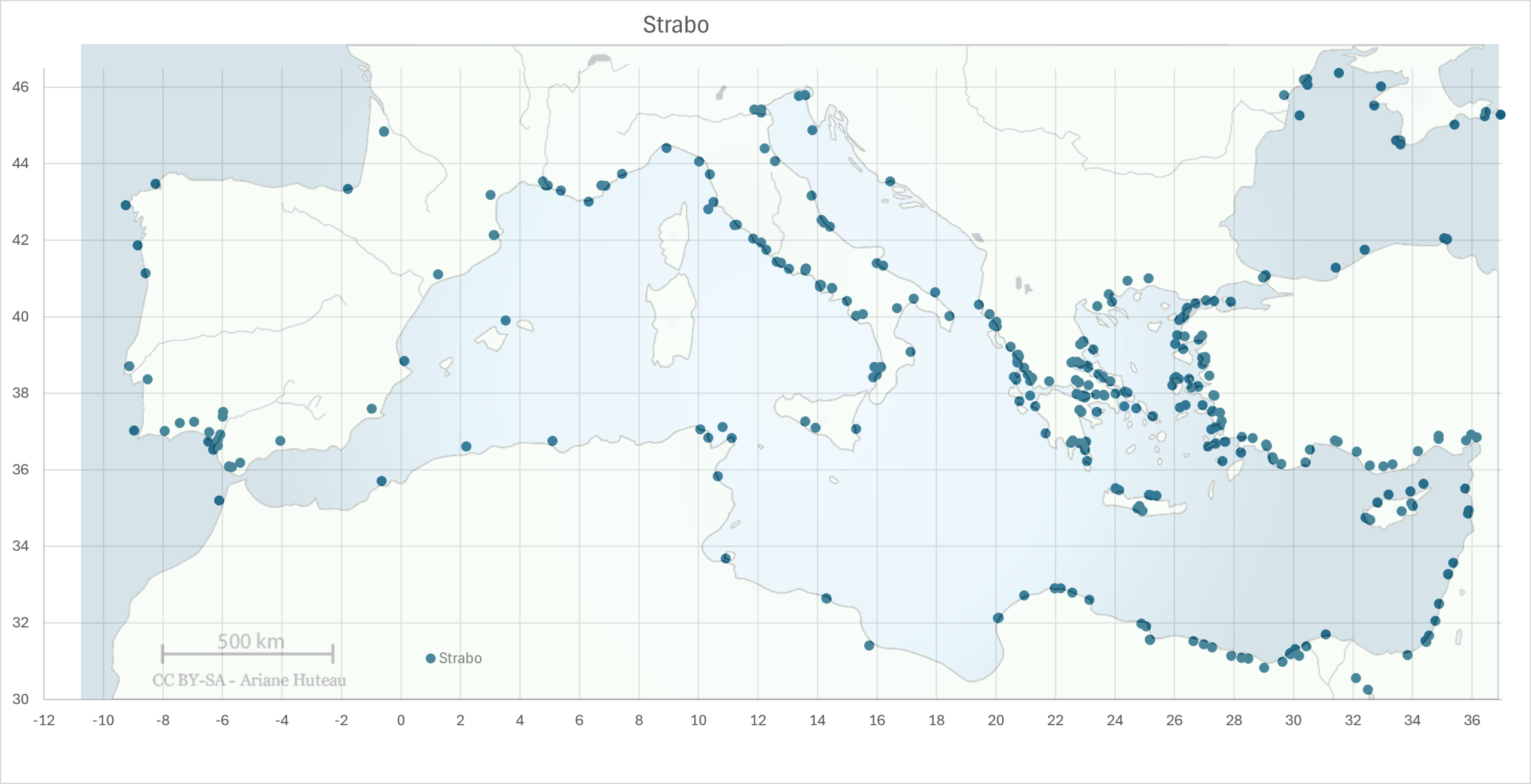
p.m. Strabo’s Geography (ca. 65 BCE – 25 CE) describing most of the known Roman world at the time of Augustus, his work often follows coastlines as if he were travelling along them. Strabo mentions 421 coastal places (https://remacle.org/bloodwolf/erudits/strabon/index.htm).
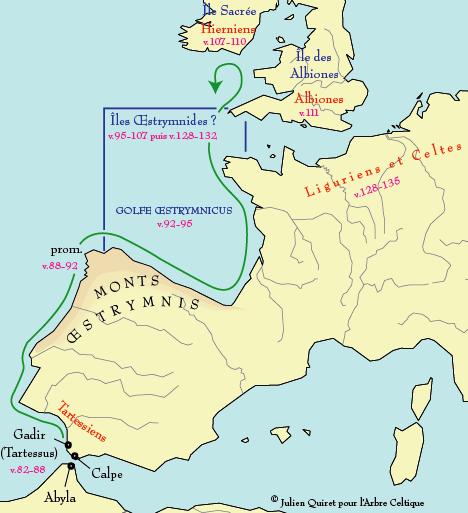
Avienius’ Ora Maritima (4th c. CE) is a poem describing the western shores of Spain to the British Isles, and the Spanish eastern shores to Marseille. It mentions 23 coastal places (https://remacle.org/bloodwolf/erudits/avienus/maritimes.htm).
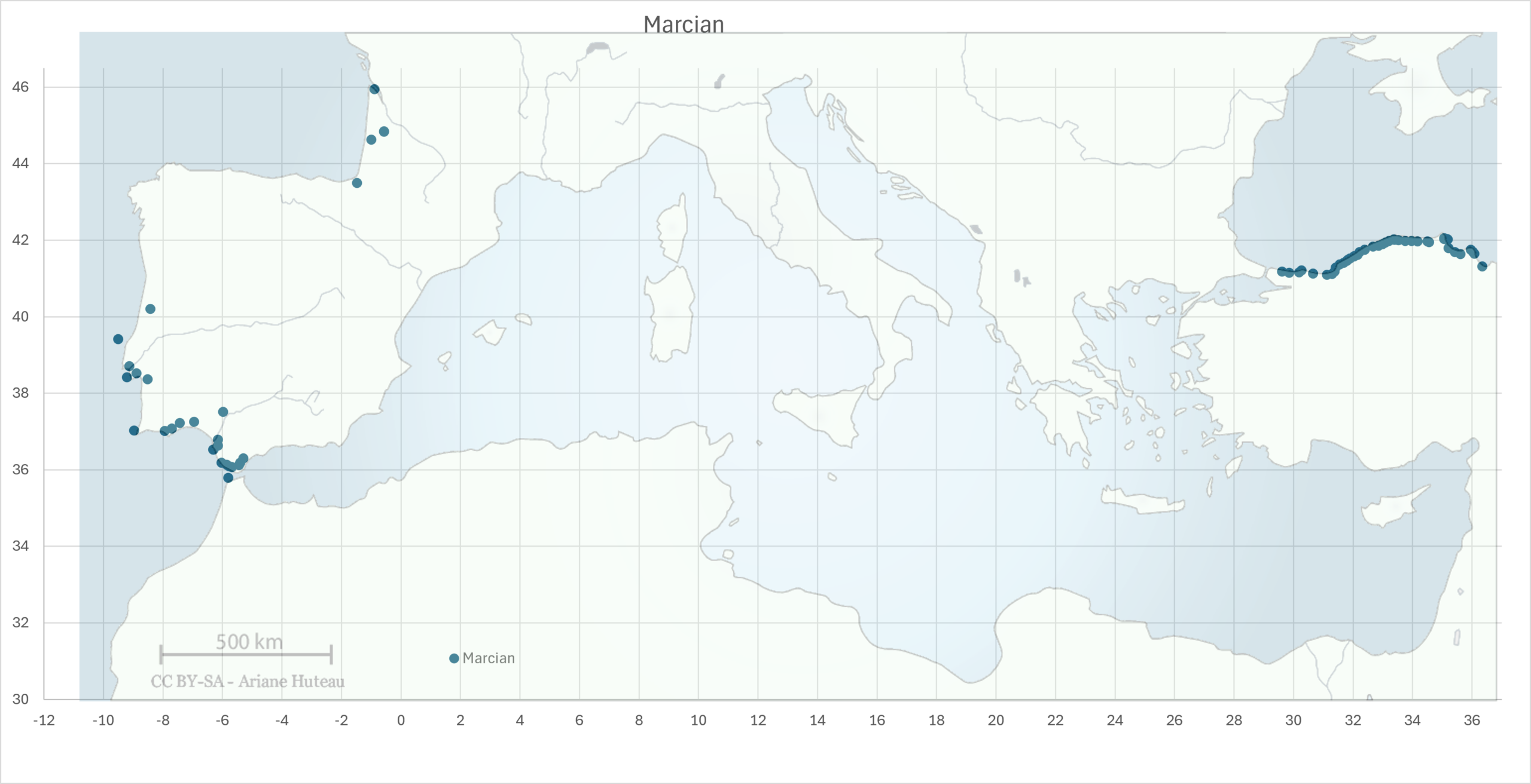
Periplus Maris Exteri by Marcian of Heraclea Pontica travelling east along the coasts of the Red Sea, The Gulf, Pakistan, India and further on to China, and travelling north along Spain, the British Isles up to the Baltic sea; he also travelled along the Turkish Black Sea coast (ca. 500 CE). It was translated by William Schoff, 1927 and mentions 155 coastal places.
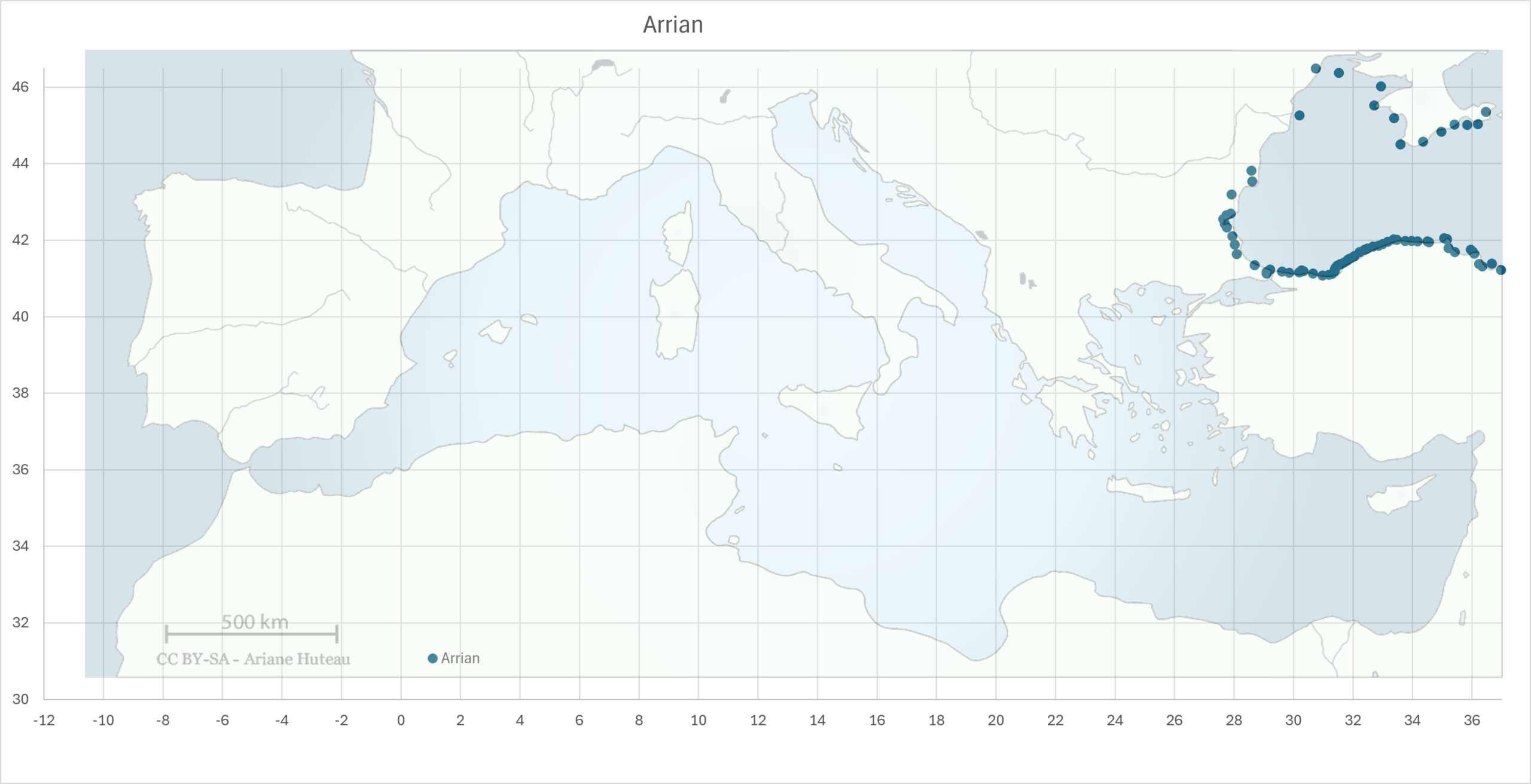
Periplus Ponti Euxini by Arrian of Nicomedia travelling around the Black Sea in a counter-clockwise direction, and reporting to his friend, the emperor Hadrian (130-131 CE). Some parts may have been written at a later date (ca. 6th c. CE) by an anonymous author called Ps-Arrian. It mentions 150 coastal places (https://remacle.org/bloodwolf/historiens/arrien/periple.htm).
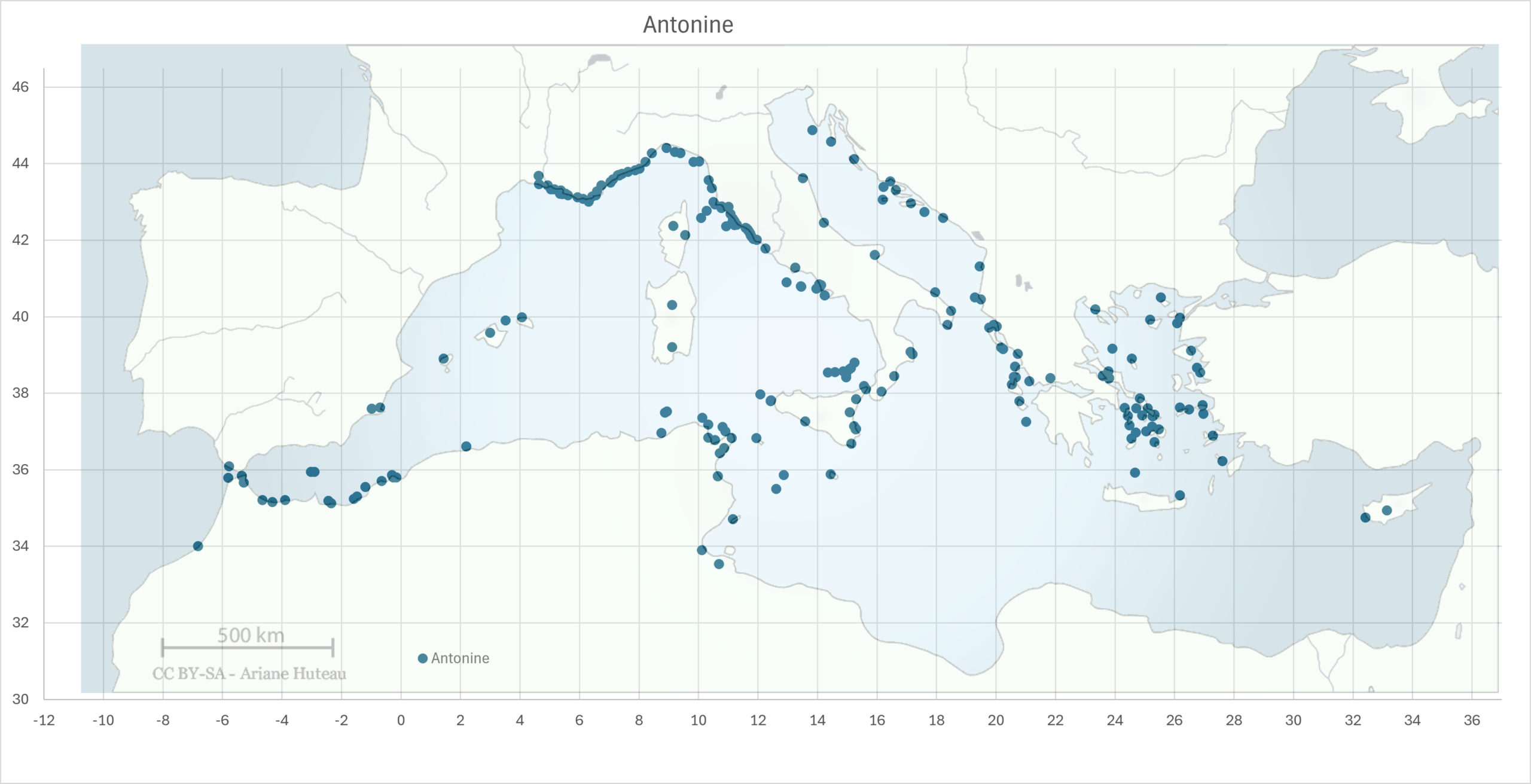
Itinerarium Maritimum Antonini Augusti travelling from the Aegean to Sicily and to Africa; another trip leads from Rome to Arles in France and several other trips involve many islands It is from an anonymous author (ca.4th-6th c. CE). It mentions 249 coastal places (https://www.romaeterna.org/antichi/itinerario/index.html).
References
Arnaud, P. (2020). Les sources du Stadiasme et la typologie des périples anciens. In Geografía y cartografía de la Antigüedad al Renacimiento (pp. 73–102). https://www.academia.edu/75879914
Bouysse, Ph. (2017). Le carthaginois Hannon a-t-il atteint le volcan Cameroun en éruption ?
Burstein, S. (1989). Agatharchides of Cnidus: On the Erythraean Sea. The Hakluyt Society. https://www.abebooks.com/first-edition/Agatharchides-Cnidus-Erythraean-Sea-Burstein-Stanley/15110472780/bd
Cuisenier, J. (2003). Le Périple d’Ulysse. Fayard. https://www.amazon.fr/P%C3%A9riple-dUlysse-Jean-Cuisenier/dp/2213615942
Journès, Georgelin, & Gassend. (2000). Pythéas, explorateur et astronome. Editions de la Nerthe. https://www.amazon.fr/Pyth%C3%A9as-explorateur-astronome-Y-Georgelin/dp/2913483100
Marcotte, D. (2000). Introduction générale. Pseudo-Scymnos. Circuit de la Terre -: Tome I. https://www.lesbelleslettres.com/livre/9782251004877/tome-i-introduction-generale-pseudo-scymnos-circuit-de-la-terre
Schoff, W. H. & Anonymous. (1912). The Periplus of the Erythraean Sea (PME) [1st Century A.D.]. http://archive.org/details/schoff-1912-periplus-erythraean-sea
Schoff, W., & Marcianus of Heraclea. (1927). Periplus of the Outer Sea, East and West, and of the Great Islands Therein. Commercial museum.
Severin, T. (1987). The Ulysses Voyage: Sea Search for the ‘Odyssey’. Hutchinson. https://archive.org/details/ulyssesvoyage0000tims
Shipley, G. (Ed.). (2011). Pseudo-Skylax’s Periplous: The Circumnavigation of the Inhabited World: Text, Translation and Commentary (1st edition). Liverpool University Press. https://www.amazon.com/Pseudo-Skylaxs-Periplous-Circumnavigation-Translation-Commentary/dp/1904675832
Vincent, W. (with Wales, W., & Tardieu, P.-F.). (1797). Voyage de Néarque, des bouches de l’Indus jusqu’à l’Euphrate, ou Journal de l’expédition de la flotte d’Alexandre , rédigé sur le journal original de Néarque conservé par Arrien, à l’aide des éclaircissements puisés dans les écrits et relations des auteurs, géographes ou voyageurs, tant anciens que modernes, et contenant l’histoire de la première navigation que les Européens aient tentée dans la mer des Indes. (J. B. L. J. Billecocq, Trans.). https://gallica.bnf.fr/ark:/12148/bpt6k5657594s